Table of Contents
- Executive Summary
- The Misconfigurations Behind Real‑World Breaches
- 1. IAM Drift: The Slow Creep Toward Excessive Privilege
- 2. Public Storage Exposure: The Most Common—and Preventable—Cloud Failure
- 3. Missing Guardrails: No Boundaries, No Safety
- 4. Weak or Missing Logging: Flying Blind in the Cloud
- 5. Misconfigured Network Controls: Overexposure by Default
- 6. Incomplete or Incorrect Encryption Configurations
- Secure Cloud Baseline Checklist
- Call to Action
Executive Summary
Cloud breaches rarely stem from exotic zero‑days. They come from quiet, preventable misconfigurations—identity drift, exposed storage, missing guardrails, and weak logging. As organizations scale across AWS, Azure, and GCP, these issues compound into systemic risk.
This article breaks down the misconfiguration patterns that cause real incidents, why they persist, and how to establish a secure cloud baseline that prevents them. For executives, architects, and security leaders, the message is simple: misconfiguration is the breach. Fix the architecture, and you fix the risk.
The Misconfigurations Behind Real‑World Breaches
1. IAM Drift: The Slow Creep Toward Excessive Privilege
IAM rarely fails all at once—it erodes.
Common Drift Patterns
- Roles accumulating permissions over time (“just add this one policy…”)
- Legacy IAM users that should have been retired but remain active
- Overly broad managed policies (e.g.,
AdministratorAccess,*:*) - Service accounts with long‑lived credentials and no rotation
- Privilege escalation paths created unintentionally through policy overlap
Why It Leads to Breaches
Attackers don’t need to break in if they can log in. Compromised credentials paired with excessive privilege create a direct path to data exfiltration, ransomware, or destructive actions.
2. Public Storage Exposure: The Most Common—and Preventable—Cloud Failure
Despite years of headlines, public storage exposure remains a top cause of breaches.
Typical Exposure Scenarios
- S3 buckets or Azure/GCP storage containers with public read access
- Misconfigured CDN or static website hosting exposing sensitive files
- Lack of encryption at rest or in transit
- Overly permissive bucket policies allowing cross‑account access
Why It Happens
Storage is easy to deploy and often managed by non‑security teams. Without guardrails, convenience wins over security.
3. Missing Guardrails: No Boundaries, No Safety
Guardrails are the architectural controls that prevent dangerous configurations from ever being deployed.
Examples of Missing Guardrails
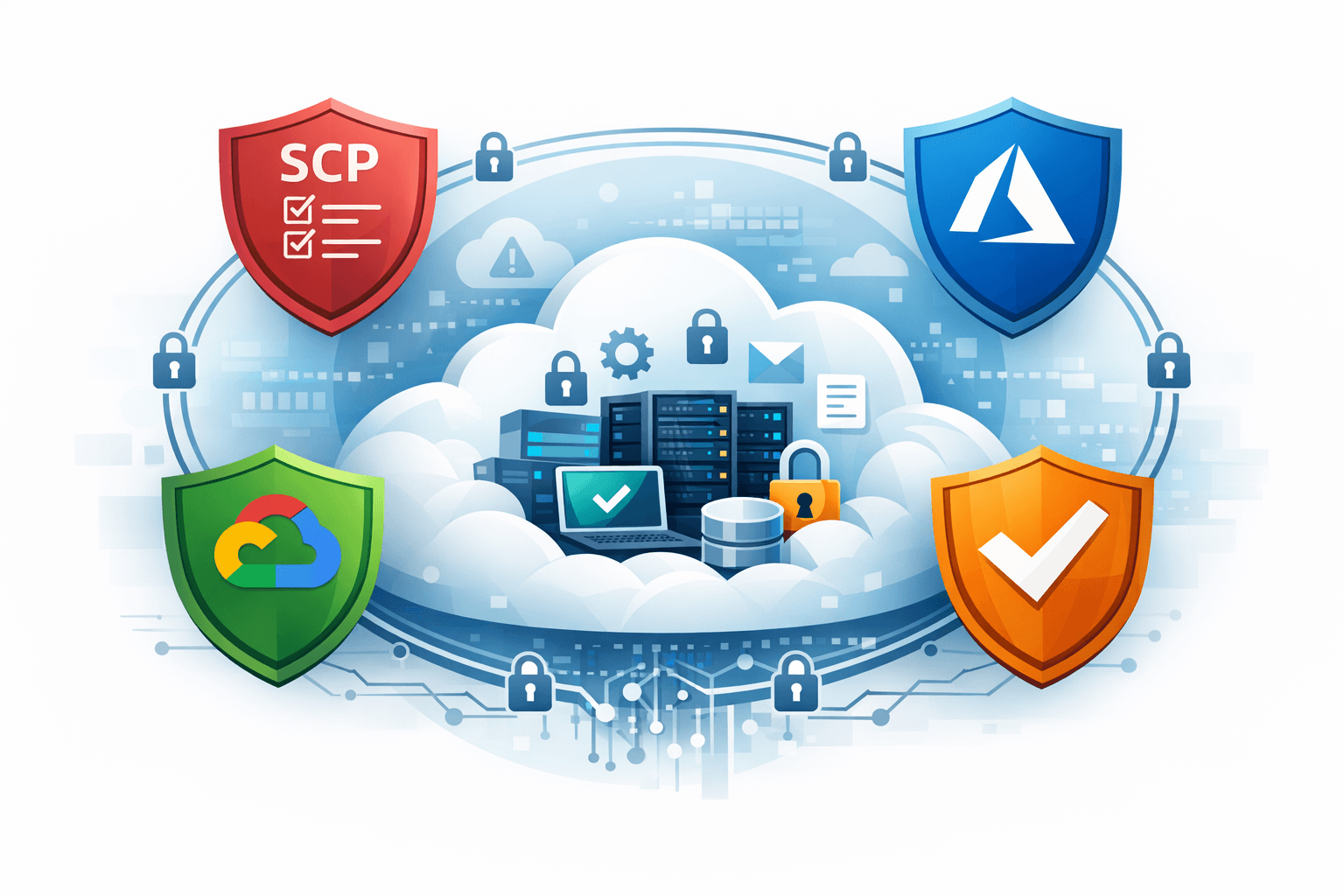
- No SCPs (AWS), Azure Policies, or GCP Organization Policies
- No mandatory tagging, making governance and cost controls impossible
- No restrictions on public IP creation or security group rules
- No baseline for encryption, logging, or IAM role assumptions
Impact
Without guardrails, every engineer becomes a potential breach vector. Guardrails turn security from reactive to preventative.
4. Weak or Missing Logging: Flying Blind in the Cloud
You can’t detect what you can’t see.
Common Logging Failures
CloudTrail disabled or only partially enabled
- No S3 access logging or object‑level logging
- No VPC Flow Logs or firewall rule logging
- Logs stored in the same account they monitor (single point of failure)
- No retention policy or immutable storage
Why It Matters
Incident response depends on logs. Without them, investigations stall, regulators lose patience, and attackers roam freely.
5. Misconfigured Network Controls: Overexposure by Default
Cloud networks are powerful but easy to misconfigure.
Risk Patterns
- Security groups with
0.0.0.0/0ingress on sensitive ports - Flat VPCs with no segmentation
- Overly permissive NACLs
- No egress controls, enabling data exfiltration
- Misconfigured private endpoints exposing internal services
Outcome
Attackers exploit the path of least resistance. Poor network segmentation turns a single foothold into full compromise.
6. Incomplete or Incorrect Encryption Configurations
Encryption is only effective when implemented correctly.
Typical Failures
- KMS keys without rotation or proper key policies
- Services using default encryption disabled or misconfigured
- Secrets stored in environment variables or plaintext config files
- No envelope encryption for sensitive workloads
Why It Leads to Breaches
Encryption failures often go unnoticed until data is exfiltrated—and unprotected.
Secure Cloud Baseline Checklist
A defensible cloud environment starts with a strong baseline. Here’s a practical, architecture‑ready checklist:
Identity & Access Management
- Enforce SSO + MFA for all human identities
- Eliminate IAM users; use roles and short‑lived credentials
- Implement least privilege with periodic access reviews
- Enforce role‑based access and privilege boundaries
- Detect and remediate IAM drift with automated tooling
Storage Security
- Block all public access at the org level
- Require encryption at rest and in transit
- Enforce bucket/container policies with guardrails
- Enable object‑level logging and access monitoring
Guardrails & Governance
- Apply SCPs / Azure Policies / Org Policies globally
- Enforce tagging standards for cost, ownership, and sensitivity
- Restrict creation of public IPs and open security groups
- Require encryption, logging, and IAM best practices by default
Logging & Monitoring
- Enable CloudTrail/Azure Activity Logs/GCP Audit Logs org‑wide
- Store logs in a separate, immutable audit account
- Enable VPC Flow Logs and firewall logging
- Implement SIEM/SOAR integration for real‑time detection
Network Security
- Enforce segmentation and zero‑trust network design
- Block
0.0.0.0/0ingress except through controlled entry points - Implement egress restrictions and DNS filtering
- Use private endpoints for internal services
Encryption & Secrets
- Enforce KMS/Key Vault/Cloud KMS usage with rotation
- Prohibit plaintext secrets in code or config
- Require secret managers for all workloads
Call to Action
Aegis Infotek helps organizations design and implement secure, governance‑aligned cloud architectures that eliminate misconfiguration risk. If you’re ready to build a defensible cloud environment—with guardrails, identity controls, and audit‑ready logging—our IAM and cloud security architecture consulting can get you there.