Table of Contents
Executive Summary
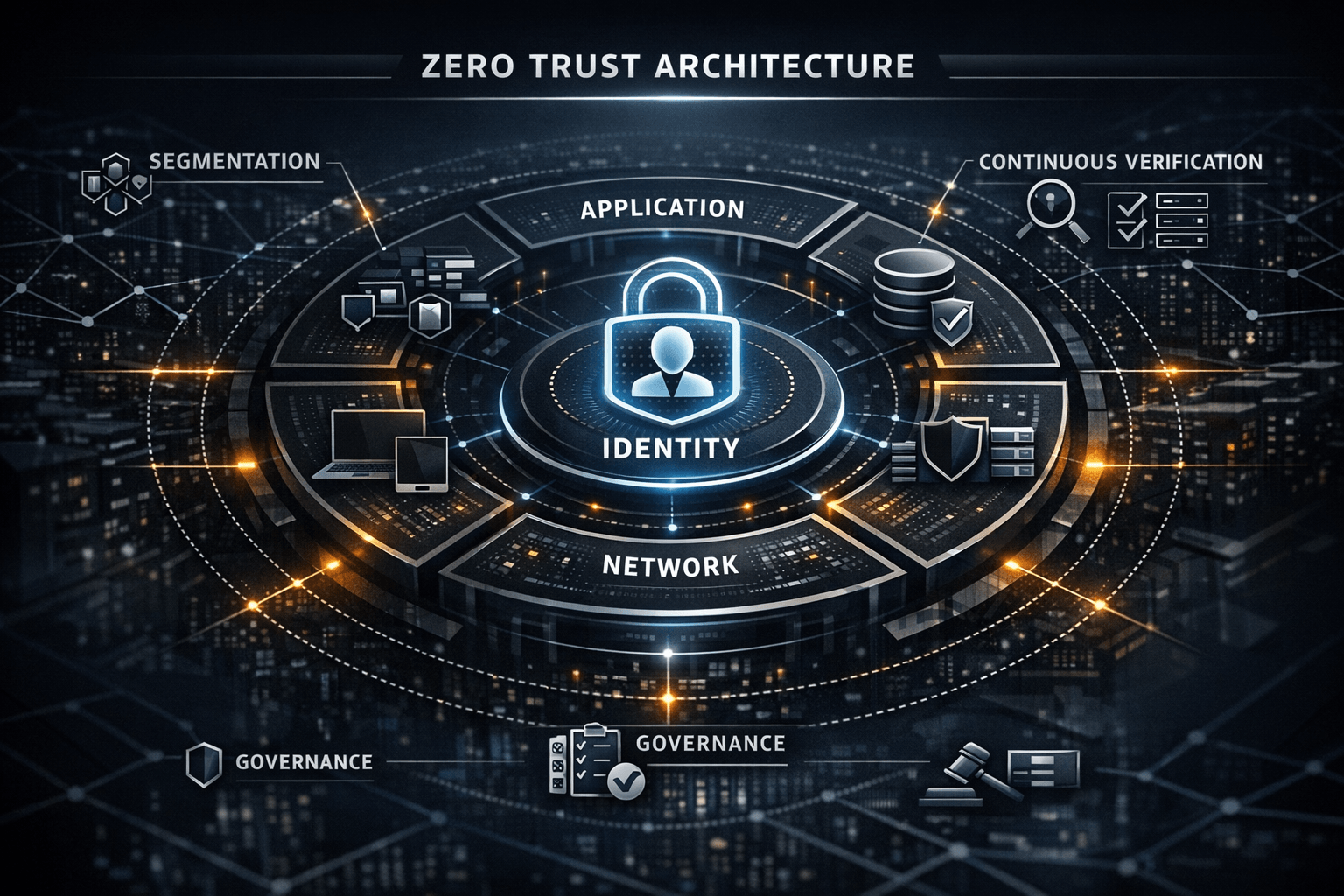
Zero Trust has been diluted by vendors into a buzzword—something you can “buy” with a SKU. In reality, Zero Trust is an architectural discipline rooted in identity, segmentation, continuous verification, and governance. It is not a product. It is not a feature. It is a way of designing systems so that compromise is expected and impact is contained.
Organizations that implement Zero Trust correctly see measurable improvements in breach containment, audit readiness, and operational resilience. Those that implement it poorly end up with fragmented tools, inconsistent policies, and a false sense of security.
This article breaks down what Zero Trust actually requires—and provides a practical blueprint for doing it right.
Identity‑Centric Design
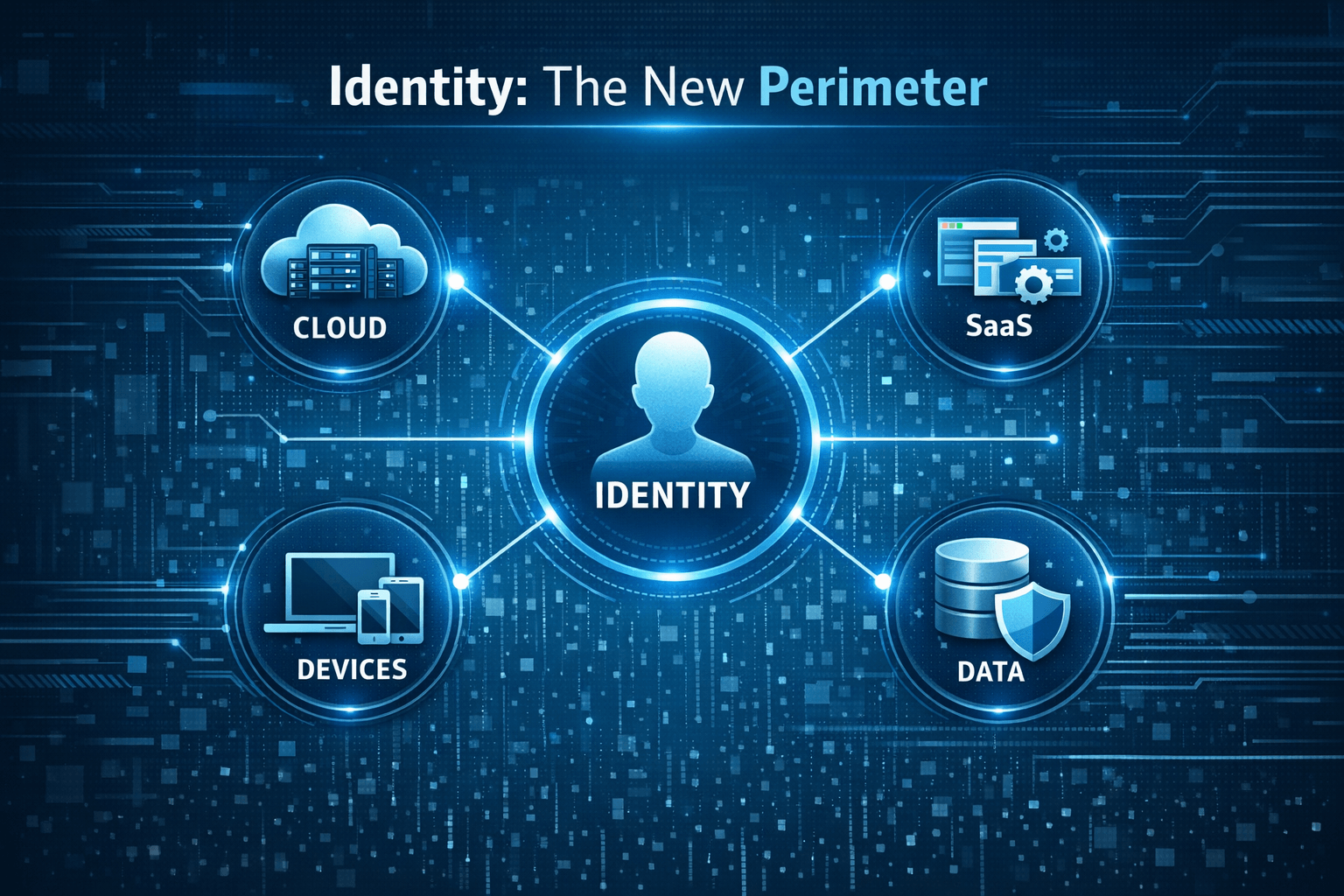
Identity is the new perimeter because modern enterprises no longer have a meaningful network boundary. Users, devices, workloads, and data operate everywhere.
Core Principles
- Every entity is authenticated before access is granted
- Authorization is contextual, not static
- Identity lifecycle is tightly governed from creation to deprovisioning
- Least privilege is enforced through role design and policy boundaries
Identity Lifecycle Management
A mature Zero Trust program treats identity lifecycle as a security control, not an HR workflow.
Lifecycle Stages
- Provisioning
- Automated account creation
- Role‑based access assignment
- Mandatory MFA enrollment
- Movement / Change
- Access reviews tied to job changes
- Privilege elevation through controlled workflows
- Continuous monitoring for drift
- Deprovisioning
- Immediate revocation of access
- Automated offboarding workflows
- Audit logs preserved for compliance
Conceptual Illustration
[Join] → [Provision] → [Authenticate] → [Authorize] → [Monitor] → [Change] → [Revoke]
Identity lifecycle is the backbone of Zero Trust. Without it, everything else collapses.
Segmentation: Containing Blast Radius
Zero Trust assumes breach. Segmentation ensures that when something goes wrong, it doesn’t become catastrophic.
Segmentation Layers
- Identity segmentation
Separate human, machine, and privileged identities - Network segmentation
Micro‑segments for sensitive workloads - Application segmentation
Access policies enforced at the app layer - Data segmentation
Classification‑driven access boundaries
Why Segmentation Matters
Segmentation is the difference between:
- One compromised credential
- One compromised credential that leads to domain‑wide compromise
Conceptual Illustration
[User] → [App Segment A] ↘ [App Segment B] ↘ [Data Segment C]
Each segment enforces its own authentication, authorization, and monitoring.
Continuous Verification
Zero Trust is not “authenticate once and trust forever.” It is continuous.
Verification Dimensions
- User context (role, behavior, location)
- Device posture (patch level, compliance, risk signals)
- Session risk (anomalies, impossible travel, privilege escalation)
- Data sensitivity (classification, exfiltration patterns)
Controls That Enable Continuous Verification
- Conditional access policies
- Real‑time risk scoring
- Session‑based access enforcement
- Continuous device compliance checks
Conceptual Illustration
Access Decision = Identity + Device + Context + Risk + Data Sensitivity
If any factor changes, access is re‑evaluated.
Governance Alignment
Zero Trust fails without governance. Architecture must be backed by policy, accountability, and auditability.
Governance Requirements
- Clear ownership of identity, access, and segmentation
- Documented policies that map to technical controls
- Audit‑ready evidence for every control
- Exception management with expiration and justification
- Continuous improvement through metrics and reviews
Governance Outcomes
- Reduced operational drift
- Faster audit cycles
- Stronger executive confidence
- Predictable, defensible security posture
Zero Trust is not a technology problem—it is a governance problem with technical enforcement.
Common Failure Patterns
Most Zero Trust initiatives fail for predictable reasons:
1. Treating Zero Trust as a Product
Buying a tool ≠ implementing Zero Trust.
2. Over‑reliance on Network Controls
Identity is the perimeter. Firewalls are not enough.
3. Incomplete Identity Lifecycle
Stale accounts, privilege creep, and manual provisioning undermine everything.
4. Lack of Segmentation Discipline
Flat networks and monolithic access policies create systemic risk.
5. No Governance Backbone
Without policy, ownership, and auditability, Zero Trust becomes chaos.
6. “One‑and‑Done” Mindset
Zero Trust is continuous. Static controls age quickly.
A Practical Blueprint for Real Zero Trust Implementation
This blueprint is designed for real organizations—not theoretical models.
Phase 1: Foundation
- Establish governance and ownership
- Inventory identities, devices, apps, and data
- Implement MFA everywhere
- Enforce baseline conditional access
Phase 2: Identity Hardening
- Automate provisioning and deprovisioning
- Implement role‑based access
- Enforce least privilege
- Introduce privileged access governance
Phase 3: Segmentation
- Segment identities (human, machine, privileged)
- Segment applications and workloads
- Segment sensitive data
- Enforce policy boundaries at each layer
Phase 4: Continuous Verification
- Deploy risk‑based access controls
- Enforce device posture requirements
- Monitor session behavior
- Apply real‑time policy adjustments
Phase 5: Continuous Governance
- Conduct quarterly access reviews
- Maintain audit‑ready evidence
- Track metrics (drift, privilege elevation, segmentation coverage)
- Iterate based on findings
Conceptual Illustration
[Foundation] → [Identity Hardening] → [Segmentation] → [Continuous Verification] → [Governance]
This is the architecture of Zero Trust—not the marketing version.
Call to Action
Aegis Infotek helps organizations design and implement Zero Trust architectures that are defensible, audit‑ready, and aligned with real‑world constraints. If you’re ready to move beyond vendor buzzwords and build a Zero Trust program that actually works, we can help you architect it the right way.