Table of Contents
Identity has become the control plane of the modern enterprise. This article breaks down IAM lifecycle management, SSO/MFA patterns, privileged access governance, role design, and common pitfalls—ending with a call to action for organizations ready to modernize their IAM architecture.
Executive Summary
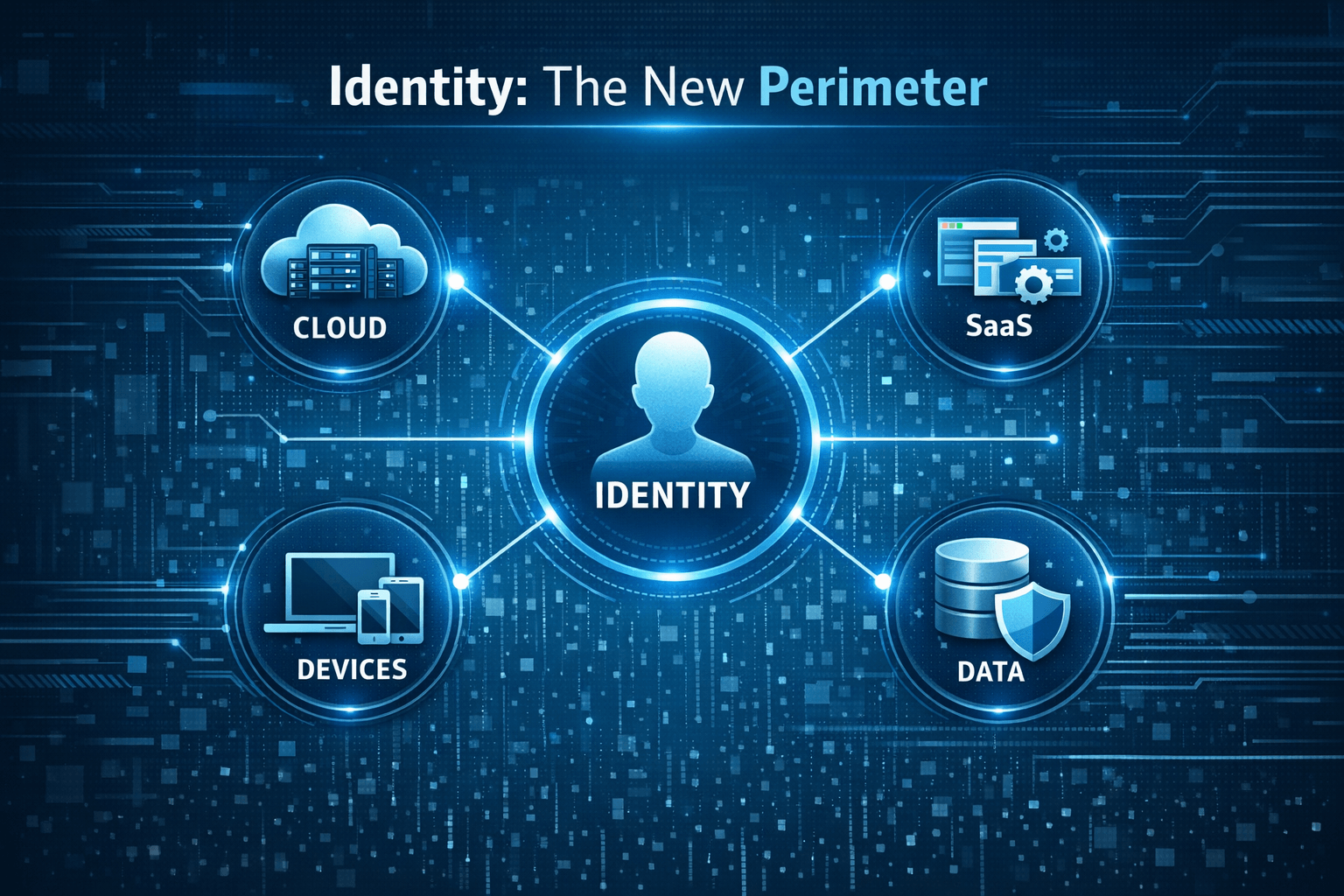
The traditional network perimeter has dissolved. Cloud adoption, SaaS expansion, remote work, and distributed data flows have shifted security from firewalls to identity. Identity is now the new perimeter, and organizations that fail to modernize IAM face increased breach risk, operational friction, and compliance exposure.
This article outlines the architectural patterns and governance practices required to build a modern, resilient IAM program.
Identity Lifecycle Management
A strong identity lifecycle is the backbone of IAM maturity.
Core Components
- Authoritative Source of Identity (typically HRIS)
- Automated provisioning/deprovisioning via SCIM or orchestration
- Attribute‑Based Access Control (ABAC) for scalable entitlements
- Machine identity governance for service accounts and workloads
Why It Matters
Weak lifecycle controls lead to orphaned accounts, privilege creep, and inconsistent access patterns—three of the most common breach vectors.
SSO & MFA Patterns for Modern Enterprises
SSO Architecture
- SAML 2.0 for enterprise apps
- OIDC/OAuth 2.0 for modern SaaS
- Passwordless (FIDO2/WebAuthn) for high‑security environments
MFA Architecture
- Phishing‑resistant MFA
- Adaptive MFA based on risk
- Conditional Access policies for contextual enforcement
Common Pitfalls
- SMS‑based MFA
- Local app passwords
- Inconsistent enforcement
- MFA fatigue attacks
Privileged Access Governance
Privileged access is the highest‑risk access in any environment.
Core Principles
- Zero standing privilege
- Just‑in‑Time (JIT) elevation
- Privileged Access Workstations (PAWs)
- Session recording & command logging
- Break‑glass accounts with strict monitoring
Governance Requirements
- Quarterly access reviews
- Automated privilege escalation detection
- Segregation of duties (SoD) enforcement
Role Design for Scalable Access
Role design determines whether IAM becomes scalable—or collapses.
Patterns
- RBAC for stable job functions
- ABAC for dynamic environments
- PBAC for cloud‑native architectures
Best Practices
- Build roles from job families
- Keep roles coarse‑grained
- Maintain an entitlement catalog
- Avoid role explosion
Common IAM Pitfalls
- Privilege creep
- Orphaned accounts
- Inconsistent MFA
- Excessive local admin rights
- Unmanaged service accounts
- Siloed IAM ownership
Call to Action
Modern enterprises cannot afford weak identity controls. If your organization is navigating cloud expansion, SaaS adoption, or compliance requirements, a mature IAM architecture is essential.
Aegis Infotek provides executive‑grade IAM architecture consulting, including:
• Identity lifecycle design
• SSO/MFA modernization
• Privileged access governance
• Role engineering
• Cloud IAM architecture (AWS, Azure, GCP)
If you're ready to transform identity into your strongest security control, let’s build your IAM roadmap together.